



The Flora and Fauna of the Hautes-Pyrénées
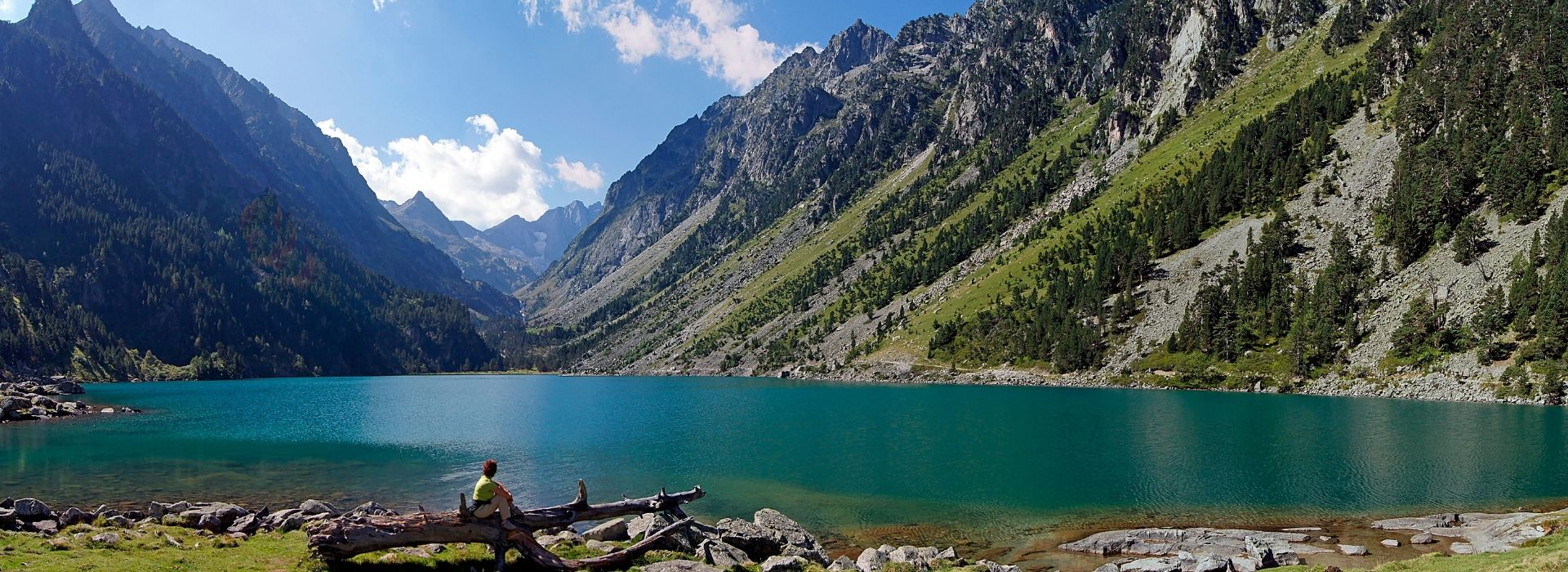
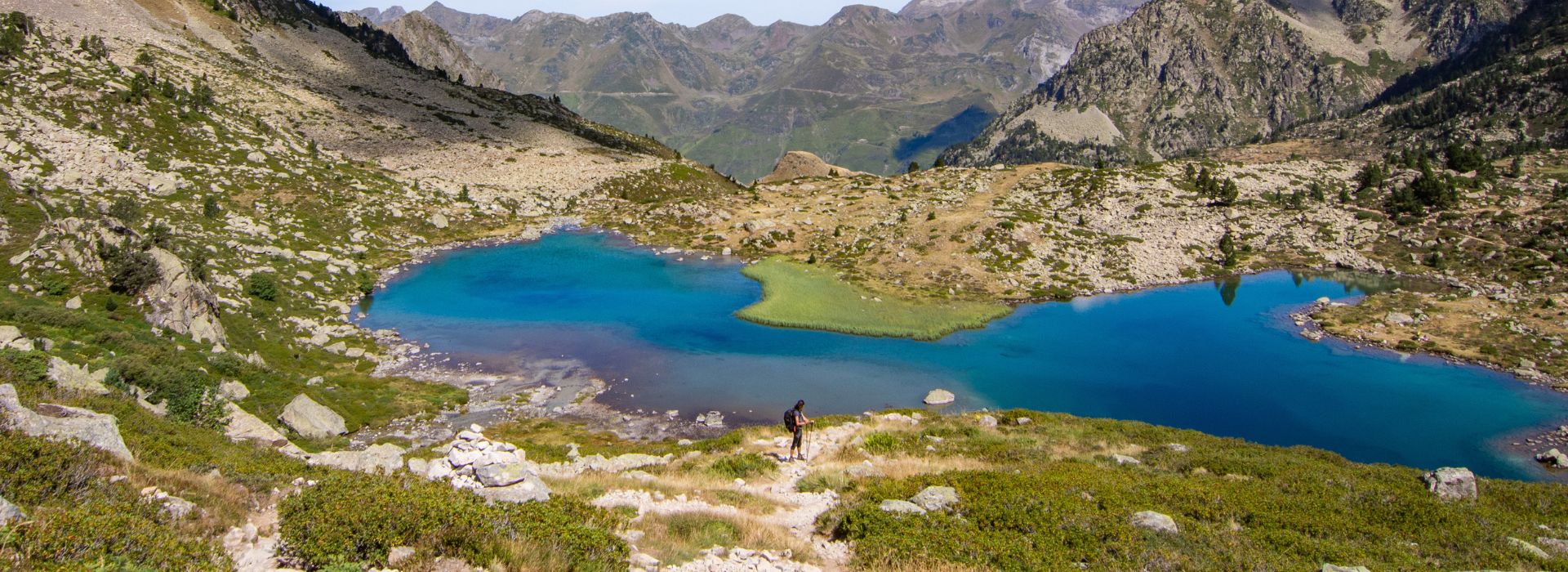
Hiking in the mountains of the Hautes-Pyrénées gives you the chance not only to get up close to wild animals in their natural habitat, but also to discover rare and protected plants.
A rare treat that a stay at our campground near Luz-Saint-Sauveur, at the gateway to the Pyrenees National Park, offers you.

Wildlife in the Pyrenees
Here’s a brief guide to the “fantastic” animals you can photograph during your next vacation in the Hautes-Pyrénées. A great idea for a family outing: the Pyrenees Wildlife Park invites you to discover the region’s iconic animals in their natural habitat.
The Marmot
Introduced to the Pyrenees in the 1950s, the marmot is the true mascot of our mountains. Found in every valley, it can be observed from a distance as it remains as discreet as a Sioux; its shrill whistle is often the first sign of its presence.
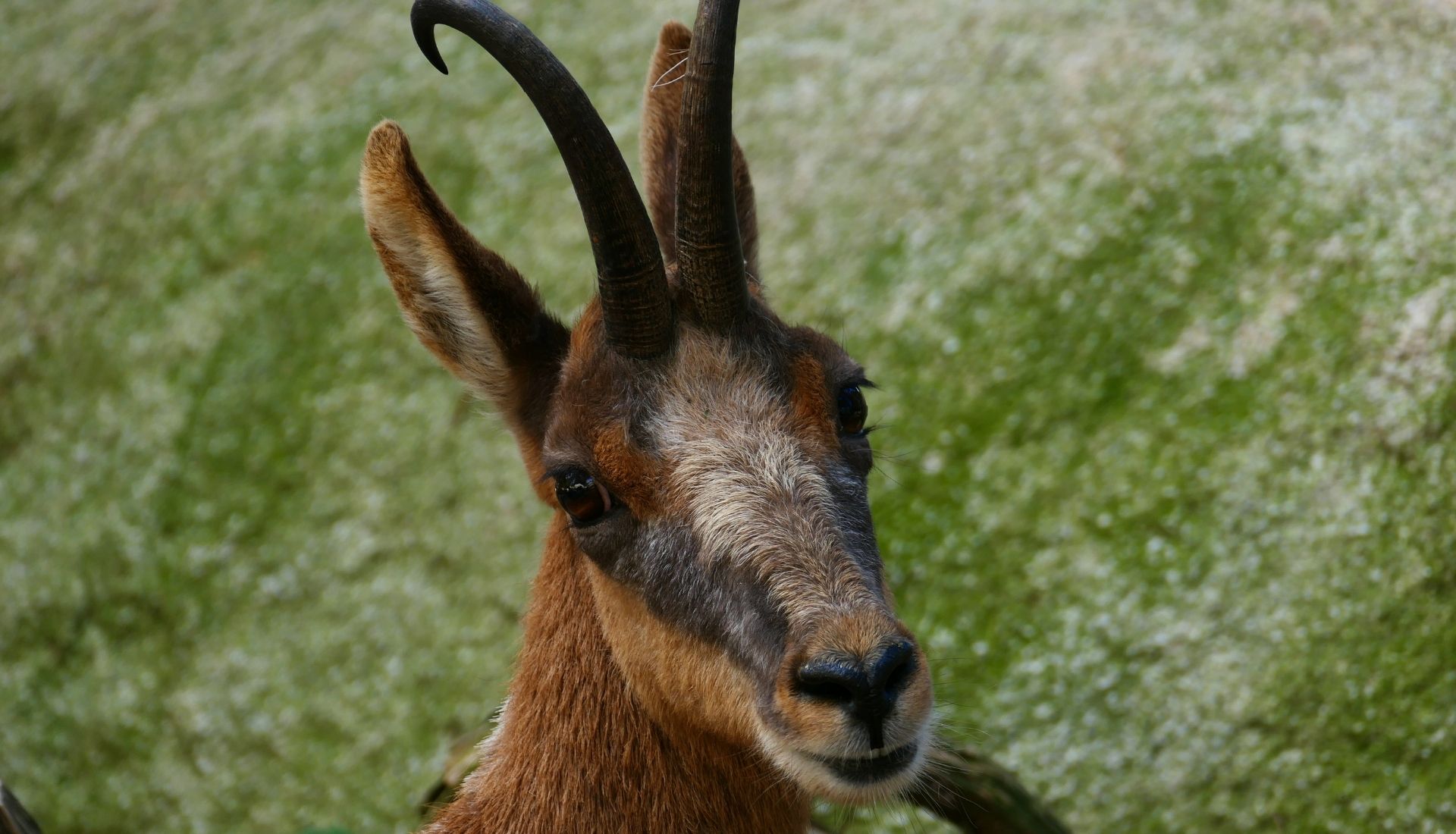
The Chamois
Don’t confuse it with its cousin, the chamois! Smaller and much more agile, it stands about 70 cm at the withers. In summer, the isard has a reddish coat; in winter, its coat becomes darker and more contrasting. The iconic animal of the Pyrenees National Park.
The Golden Vulture
One of the largest birds of prey in the Pyrenees, easily recognizable by its slow, majestic glide, often circling in concentric patterns above the ridges. Despite its reputation as a scavenger, it plays an essential role in the mountain ecosystem by removing animal carcasses. Look up on a clear day—its impressive wingspan and silent flight make it one of the most beautiful sights in the Pyrenean sky.
The Bearded Vulture
Nicknamed the “bone-breaker,” it is Europe’s largest bird of prey, with a wingspan of up to 3 meters. In 2024, 57 breeding pairs were identified in the French Pyrenees. Recognizable by its reddish-orange underparts and distinctive black beard, it feeds exclusively on bones, which it drops onto rocks to break them—a behavior unique in the animal kingdom. As a protected species classified as “Endangered,” spotting one remains a rare privilege.
The Golden Eagle
A vulnerable and endangered species, the king of birds of prey is found in the Pyrenees, with about 80 pairs, including some 30 within the National Park. Known for its elusiveness, it remains difficult to spot—a true treat for the lucky few who catch a glimpse of it.
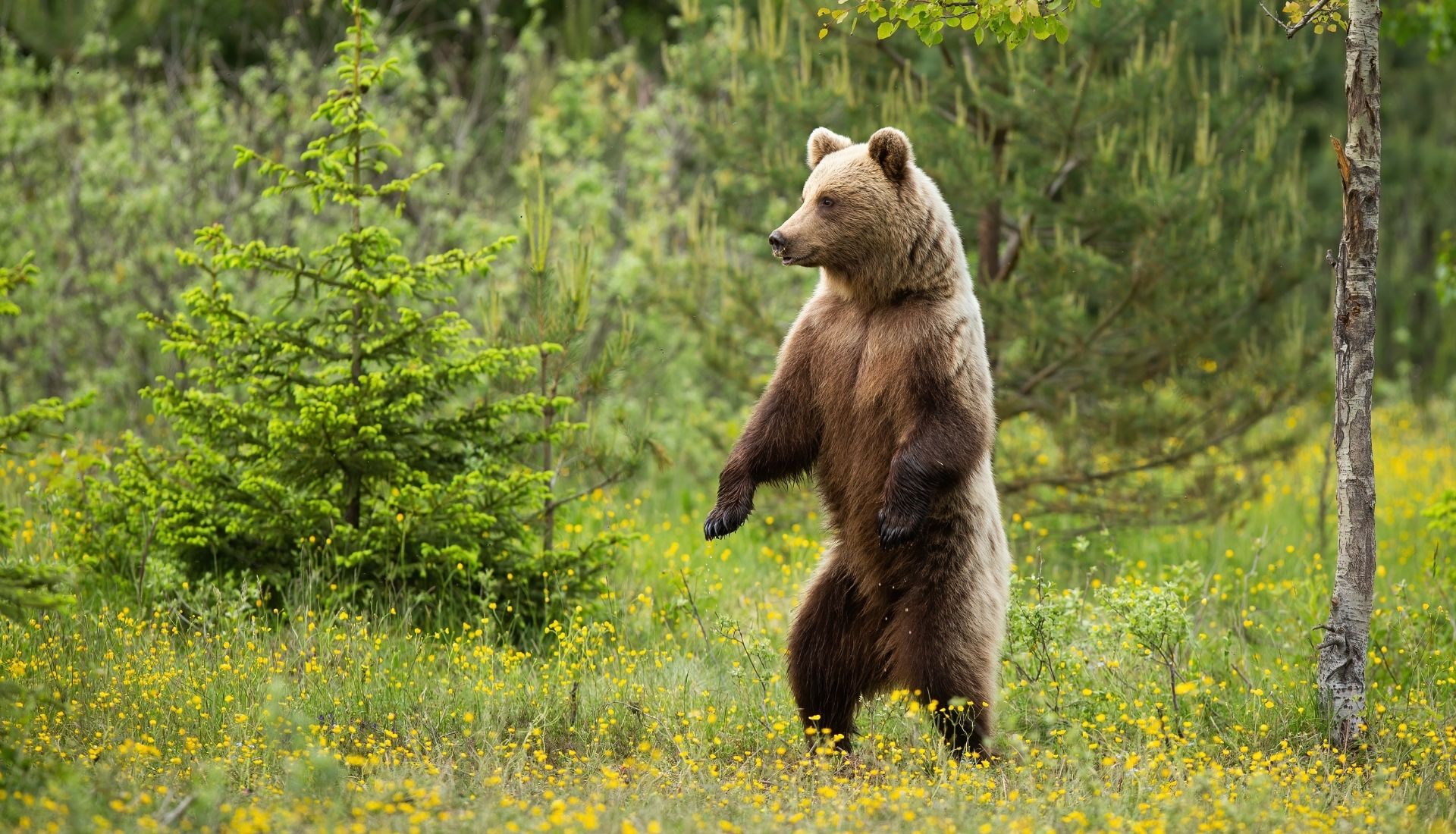
The Brown Bear of the Pyrenees
Spotting a bear as you round a bend is nothing short of a miracle, given how elusive the animal is. In 2024, 96 brown bears were identified throughout the Pyrenees mountain range—a record since their reintroduction in the 1990s—with 22 cubs born in a single year. In 2025, that number reached at least 108 individuals recorded on both sides of the Pyrenees. This is great news for biodiversity in the Pyrenees!


Flora
The Flora of the Pyrenees
Located in the heart of the mountain range, the Pyrenees National Park is home to more than 2,500 plant species, representing over 40% of the plant diversity found in metropolitan France. Among the wild plants and flowers you can spot on your hikes:
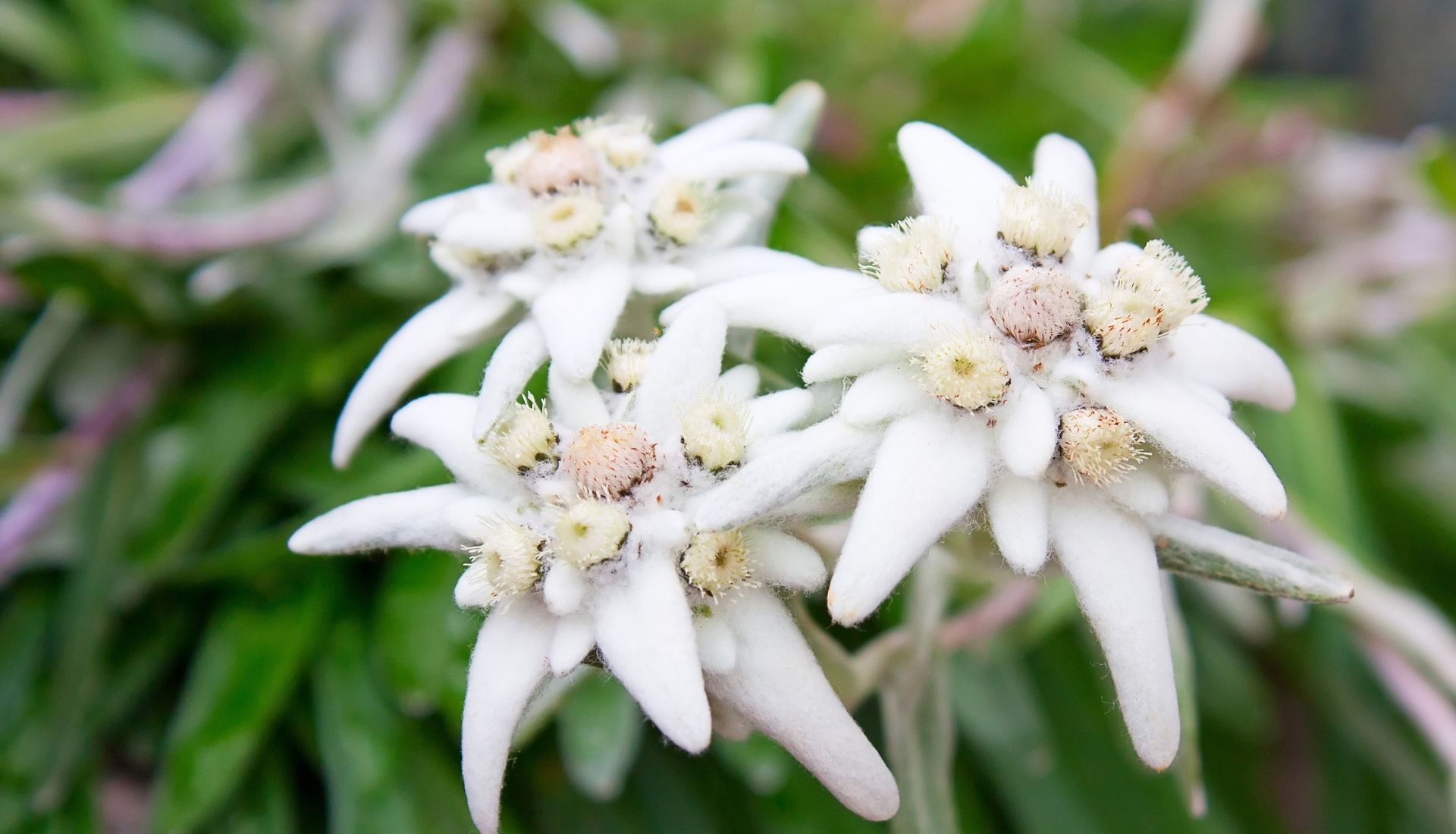
The Edelweiss
Now a symbol of mountain flora, the edelweiss—also known as lion’s foot, silver star, or glacier star—is a rare plant, recognizable by its silvery-gray, downy foliage and its small, velvety white, star-shaped leaves.
The Rusty Rhododendron
This hermaphroditic plant, which blooms in the summer, gets its name from the rust-colored undersides of its leaves. It is found on mountain slopes at altitudes between 1,500 and 2,500 meters; its pinkish clumps carpet the slopes in the spring.
La Ramonde des Pyrénées
Similar to the primrose, the Ramonde is distinguished by its large, oval leaves arranged in a rosette and its large purple flowers with orange stamens; it is a species endemic to the Pyrenean cliffs.
The Pyrenean Willow
An endemic species, this dwarf tree—ranging from 20 to 50 cm in height—forms a miniature forest along the stony alluvial deposits of the Gaves valleys, an unexpected botanical sight.
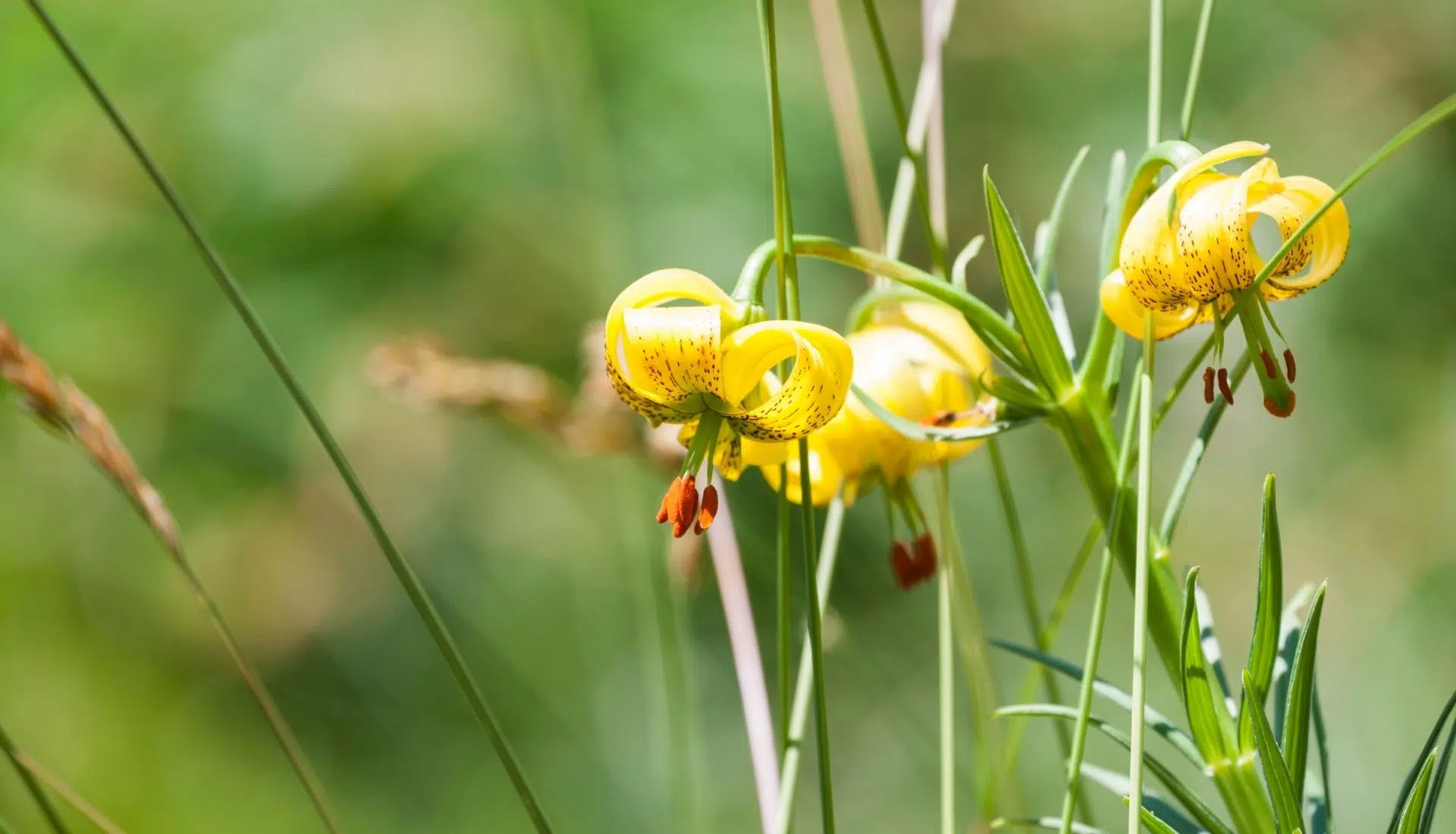
The Lily of the Pyrenees
Typical of this mountain range, this lily grows in mountain meadows and along rocky paths. It can be recognized by the yellow-orange color of its petals. It should not be confused with the purple martagon lily.
The Pyrenean Aster
A rare and protected species, this endemic plant grows on steep slopes in pastoral areas, most often at the base of limestone cliffs—a botanical gem to be observed with respect.
The Pyrenean Iris
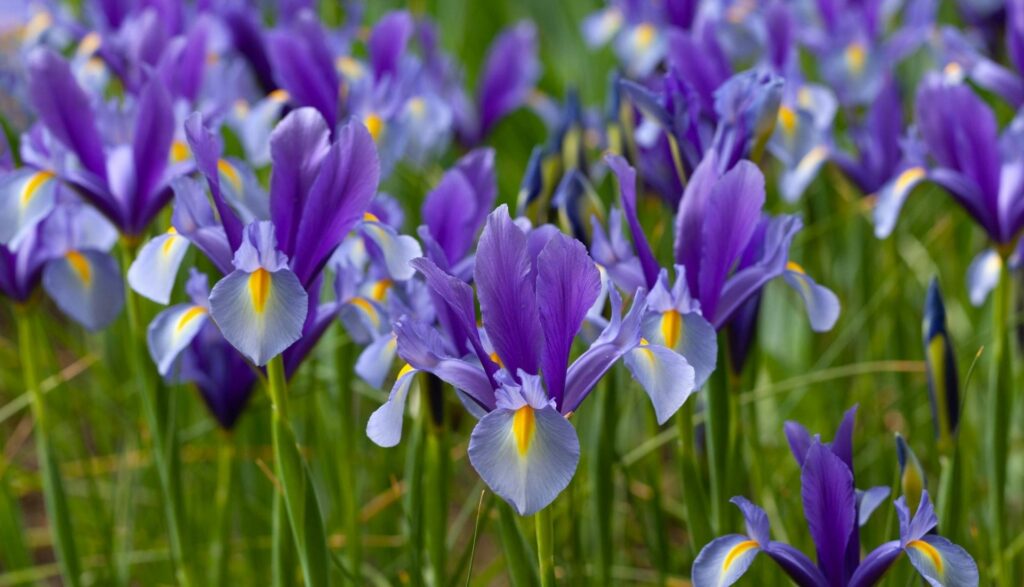
This endemic species is distinguished by its large blue-violet flowers, which bloom between July and August in sunny mountain meadows.
The Amethyst Hyacinth
This small herbaceous plant, ranging from 10 to 30 cm in height, grows in calcareous soil in scree and subalpine meadows at elevations up to 1,500 m.
The Pyrenean Geranium
From May to October, its purplish-violet to bluish-violet flowers brighten the slopes at altitudes ranging from 300 to 2,000 meters, adding a splash of color that can be enjoyed as early as the first spring hikes.
To preserve the biodiversity of the Hautes-Pyrénées, it is prohibited to pick wild plants and flowers in the Pyrenees National Park.
Discover also